Making Sense of The DeepSeek Moment
DeepSeek’s AI innovation challenges proprietary models, advancing digital sovereignty and public sector growth. This article explores its impact on the GCC, highlighting open-source AI’s role in transparency, efficiency, and economic resilience. Discover how Frost & Sullivan can help governments navigate AI strategy and policy for long-term success.
What is the hype about Deepseek?
DeepSeek, a Hangzhou-based Chinese AI company, was founded by a quantitative hedge fund company High-Flyer in 2023. The company focuses on AI research and has been building open-source large language models (LLMs) optimised for limited compute resources (combination of NVIDIA H800 and Huawei Ascend 910C chips). The top proprietary models from leading AI companies – Open AI, Google, Anthropic – are following the “bigger the better” playbook, relying on massive energy and compute infrastructure (GPU chips and data centers). With the small difference that Meta is partially open source, these models are trained on large data sets in a closed environment. DeepSeek’s release of efficient and high-performance models, comparable to the US top AI models, not only rattled the established players but also precipitated geopolitical contestation between China and the US. This contest is a newer iteration of the ongoing race to gain supremacy in the global AI landscape.
Redefining AI Innovation:
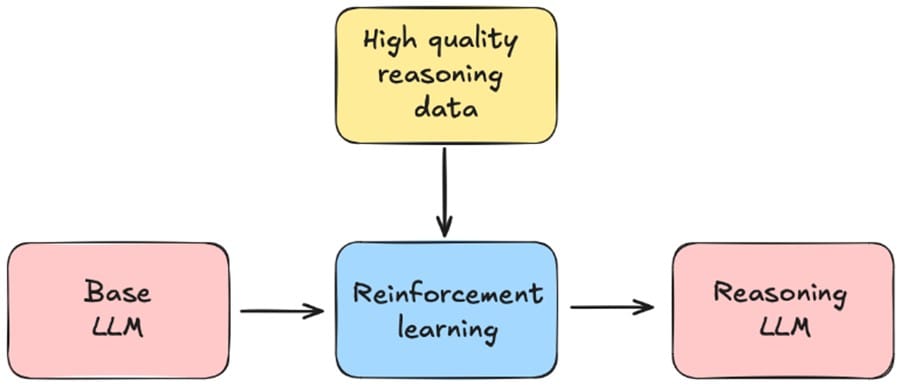
While DeepSeek is not reinventing the wheel and is broadly follows the same agenda, it has relied more heavily on reinforcement learning (RL) and mixture-of-experts (MoE) methods and refined chain-of-thought (CoT) reasoning very effectively. It is widely reported that DeepSeek has delivered its R1 reasoning model at a fraction of the cost of leading models – approximately $5.5 million, compared to the hundreds of millions dollars spent on leading proprietary models by the companies like Open AI and Anthropic. Deepseek has alleviated concerns that Gen AI development requires massive investments in compute infrastructure and energy resources. This could force the US AI industry to rethink its investment strategy and shift from the scaling at-all-costs-framework towards efficient and innovative resource optimization.
One might argue that the methods such as MoE and RL methods were developed in academic research decades ago; and some, like transformer models and CoT reasoning, have been introduced and used by leading tech firms in the US and Europe. Nevertheless, DeepSeek has effectively combined these techniques, as published in their research paper. It remains to be seen whether Chinese firms and academia can truly come up with the next set of game-changing techniques, products and approaches in AI development.
This pivotal moment presents an opportunity to redefine public sector innovation by investing in open-source AI capabilities built on sovereign, adaptable models like DeepSeek. This strategic move would not only enhance digital sovereignty but also unlock unprecedented value creation, positioning the GCC as a global AI leader.
Why Open-Source AI? The Case for Digital Sovereignty
Relying on proprietary AI systems from foreign vendors introduces risks, limited transparency, dependency on external updates, and vulnerabilities in data governance. By contrast, open-source AI frameworks like DeepSeek empower nations to control their technological destiny.
- Data Security & Compliance: Open-source models enable governments to audit algorithms, ensuring alignment with local regulations (e.g., UAE’s Data Law and Saudi’s NDMO standards). This mitigates the risks of third-party data exploitation.
- Customization: Open-source models like DeepSeek’s architecture allows customization for Arabic language nuances, cultural contexts, and sector-specific needs (e.g., healthcare, education, smart cities), fostering citizen-centric services.
- Cost Efficiency: Eliminating licensing fees and reinvesting savings into local AI talent pipelines creates a self-sustaining ecosystem.
- Sustainability: Supports sustainable AI development by leveraging energy-efficient models and enabling reusability of AI resources.
For nations prioritizing economic resilience in their long-term vision, open-source AI is a cornerstone of strategic autonomy.
Value Creation Through Local Ecosystems:
Building open-source AI is not just a technical endeavour—it’s an economic catalyst.
- Talent Development: Collaborate with universities to train a new generation of Arab AI engineers, reducing dependence on expatriate expertise.
- Public-Private Partnerships: Support startups in developing solutions on sovereign AI platforms, fostering innovation in sectors such as fintech and logistics.
- Global Leadership: Export UAE- and Saudi-developed AI tools to MENA and Global South markets, positioning the GCC as a hub for ethical, culturally aware AI.
Strategic Advantages of DeepSeek:
DeepSeek’s architecture aligns with GCC ambitions:
- Efficiency: Optimised for high performance with lower computational costs, making it ideal for large-scale public sector adoption.
- Transparency: Open-source code allows scrutiny, fostering public trust in AI-driven governance.
- Interoperability: Integrates with existing digital infrastructure (e.g., UAE’s “Gov 4.0” platforms), maximising ROI.
The Path Forward:
To capitalise on this opportunity, the UAE and Saudi Arabia should:
- Launch National AI Labs: Build in-house expertise to customize and maintain open-source models.
- Establish Governance Frameworks: Define standards for ethical AI use, data privacy, and cross-agency collaboration.
- Foster Regional Alliances: Facilitate knowledge sharing of best practices and tools across GCC nations to build a unified AI ecosystem.
The Missing Components:
Deepseek provides only open model weights for their R1 model and does not disclose details on the data that the model was trained, the training code and even scaling laws. These components are important for other players to develop similar models for their local socioeconomic contexts in the open-source environment.
Conclusion
In a world where AI dominance is increasingly viewed as synonymous with geopolitical influence, open-source capabilities are the region’s gateway to digital self-reliance, AI sovereignty and autonomy. By investing in open-source AI solutions, governments and other public sector entities can future-proof their agencies, foster innovation, and leverage sovereignty into a comparative advantage. The players in GCC can collaborate with open-source AI players like Huggingface, Deepseek and Mistral to advance their open-source AI capabilities and orchestrate innovation ecosystem with greater efficiency.
Co-authored by: Sreekanth Mukku, Independent Consultant and AI Policy and Governance Expert and Saurabh Verma, Vice President, ICT Growth Advisory, Frost & Sullivan
This article was published originally for Frost & Sullivan on 05 February 2025.